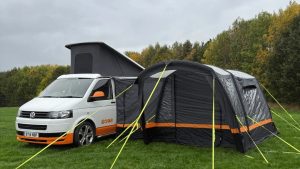

A drive away air awning is an inflatable, freestanding room that links to your campervan through a fabric tunnel. Air beams replace poles, so you pitch it with a pump rather than threading poles. Pick the right connection height, usually low for VW-sized vans, then unhook the tunnel and drive off, leaving it standing.
A drive away air awning for a campervan solves one problem well: it gives you a dry, enclosed living room, whatever the weather, that stays on the pitch when you take the van out for the day. Choosing one is mostly about fit. Get the height and the attachment right for your van, and the rest comes down to size, fabric and how long you tend to stay in one place.

How a drive away air awning works
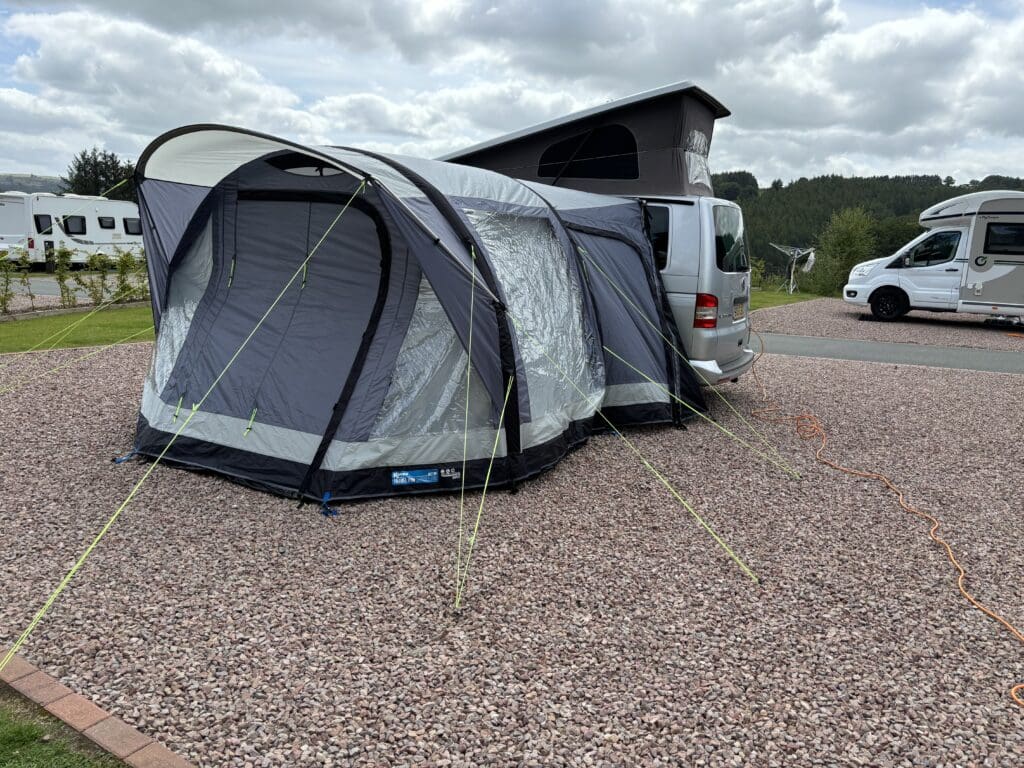
If you are new to the idea, start with our guide to what a drive away awning is. In short, the awning stands up on its own, and a tunnel at one side connects it to your vehicle until you unhook it.
In an air version, the structure is a set of inflatable beams rather than poles. You peg the awning out, pump the beams up, connect the tunnel and peg out the guy lines. Air awnings have the air tubes built into the fabric, which is why they tend to cost more and pack slightly larger than poled versions. CamperNV’s air awning vs poled awning guide compares the two in detail.
Getting the height right for your campervan
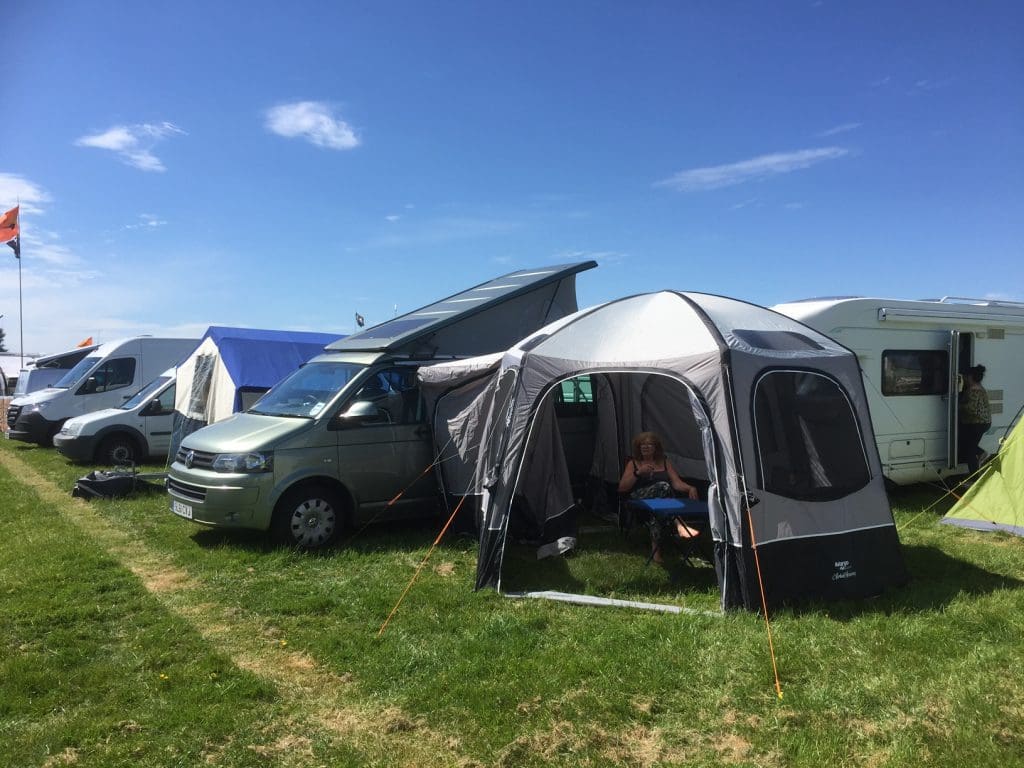
Connection height is the most important measurement: where the tunnel meets your vehicle, usually at the awning rail. Get it wrong and the tunnel will not seal, or will sag and collect water.
| Band | Typical range | Usually suits |
|---|---|---|
| Low or lowline | 180 to 210cm | VW Transporter, California and similar sized vans |
| Mid, standard or midline | 205 to 245cm | Mid-height and some high-top vans |
| Tall or highline | 245 to 295cm | Coachbuilt motorhomes and tall panel vans |
These are typical ranges, and makers do not all use the same bands: some use just two, with low running up to about 240cm, so always check the specific awning. CamperNV’s drive away awning heights guide goes into more detail.
Low height: VW Transporter, California and similar
Unless you have a high-top van with a rail fitted up high, VW Transporter sized campers fall into the low connection range, as CamperNV’s guide to drive away awnings for VW campervans explains. That covers most conversions of that size. Our T7 vs T6 comparison covers the vans themselves.
Mid and tall heights: high tops and motorhomes
A fixed high top, or a rail mounted higher on the body, will often need a mid or tall model, and a larger coachbuilt motorhome nearly always does. If you sit between two bands, go by the awning’s stated range, not its name.
How to measure your van
Park on level ground and measure from the ground to your awning rail, or to the top of the van if there is no rail, then compare it with the awning’s stated range. Take it at both ends of where the tunnel will sit.
How it attaches to your van
Most models can connect in more than one way, depending on what your vehicle already has.
- Awning rail and drive away kit. The neatest option. A double-sided Kador strip slides into the channel on the vehicle and the awning’s beading slides into the other side, so you pull the strip out to leave. CamperNV’s driveaway kit guide explains this figure of eight setup in detail. Owners on the T6 Forum point out that the kit is often not included with the awning, so budget for it.
- Magnetic strip. Holds the tunnel to a steel body. Useful without a channel.
- Throw-over storm straps. Straps go over the roof and are pegged down on the far side. Simple and works on almost any van.
- Roof bars. Velcro loops or straps wrap around roof bars.
- Pole and clamp. A pole in a sleeve clamps into the gutter, which suits some older vans.
If you are converting or upgrading, fitting a rail makes life far easier. See the options on our awning rails, awnings and sunshades page.
Air or poled: is inflatable worth it?
Air is the popular choice for both campervan and motorhome owners, but it is not automatic.
| Air (inflatable) | Poled | |
|---|---|---|
| Pitching | Peg out and pump | Threading and sorting poles |
| Wind | Beams flex with gusts | Fibreglass can snap in extremes |
| Pack and weight | Usually larger and heavier | Usually smaller and lighter |
| Price | Generally higher | Generally lower |
| Weak points | Valves and beams | Poles and joints |
Inflatable beams flex and absorb gusts rather than resisting them, while rigid poles can snap in extreme wind. The trade-off is a larger pack size and a higher price, as CamperNV’s air awning vs poled awning guide sets out.
Owners are not all convinced. One poster on MotorhomeFun felt air awnings were not much quicker to pitch, cost more, and packed heavier and larger. Another reported two valves failing on their air awning over several years. If storage is tight, check the packed weight before you buy.


Layout, living space and sleeping
Compact awnings for VW-sized vans
A small drive away awning suits a couple who want somewhere to cook, sit and store kit, and it takes less room on the pitch and in the campervan. Larger models with side rooms suit families.
Inner bedrooms and annexes
If you plan to sleep in the awning, manufacturers recommend an inner bedroom to help regulate temperature and reduce condensation. Many offer a clip-in two-person inner that takes a double airbed.
Footprint and pitch width
The tunnel adds width. One MotorhomeFun owner pointed out that even the smallest drive away models come out about a metre further than a roll-out awning with sides, and another said theirs added a little under three metres. Make sure your usual sites have wide enough pitches.
Side, front or rear facing
Think about which door you use most and where the tunnel door sits. Some models come in mirror-image versions so you can choose which end it faces.
What to look for when buying
- Fabric. Polycotton-type fabrics breathe better and last longer than polyester, but cost and weigh more.
- Doors and windows. Full zips rather than Velcro keep out draughts and rain. Mesh panels help on warm nights.
- Valves. Check how the pump connects and whether spare valves are easy to get.
- Hook-up access. A cable port makes using mains in the awning tidier.
- Warranty. Check what it covers on beams and valves.
Several well-known brands make low air models. Compare on stated range, packed weight and floor plan rather than brand.
Not sure how an awning will work with your campervan, or thinking about adding a channel for one? Book a visit to North Berwick and see our conversions in person.
Driving away and reconnecting
Leaving is the easy bit: pull out the connecting strip, roll the tunnel up and leave it pegged. Coming back is harder.
Owners on the T6 Forum say lining back up is the fiddly part, especially if you want the tunnel taut so water does not pool. Several leave their levelling blocks on the pitch to drive straight back onto.
Before you leave, peg out all the storm straps. A drop in temperature overnight can soften the beams, so check the pressure in the morning. CamperNV’s guide to air awnings in wind and rain has more pitching tips.
The downsides owners report
Owner forum threads are honest about the drawbacks:
- Bulk. One T6 Forum owner called it the largest and heaviest single item on board.
- Tunnel sag. A slack tunnel can collect rainwater. A tunnel that is not tight against the van is a common cause of sagging.
- Wind. A MotorhomeFun owner kept theirs up in a gale by disconnecting the tunnel to reduce flapping and pegging all the storm straps.
- Barely used. Owners on both forums note that many drive away awnings end up for sale after only a couple of uses.
What does a drive away air awning cost?
Across the 32 air drive away awnings CamperNV listed on 1 November 2026, prices ran from £399 to £1,250, with a middle price of £772, according to its drive away air awning cost guide. Add the cost of the connecting kit and possibly a footprint.
Second-hand and ex-display awnings are a sensible route, since so many are sold after light use, and good ones tend to hold their value.
Is an air drive away awning worth it for you?
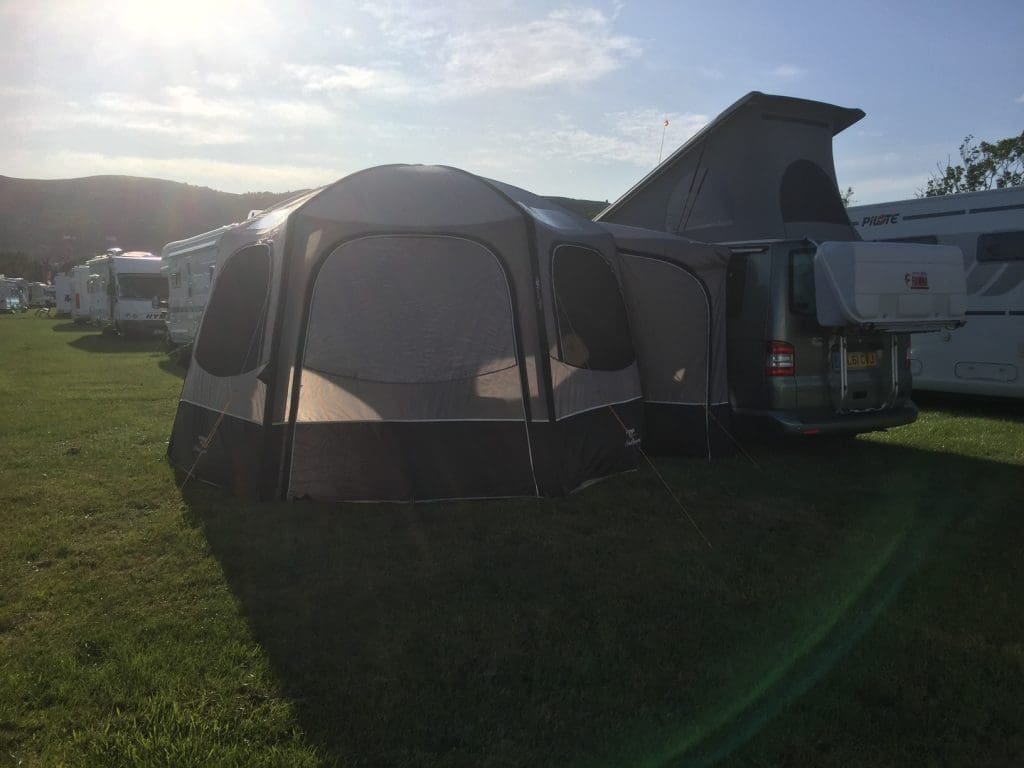
The clearest pattern in owner discussion is time on site. Several T6 Forum and MotorhomeFun owners say it is worth the effort for stays of three or four nights or more, and a hassle for one-nighters.
Here is how that plays out. A couple in a VW-sized camper spending a week at one site in the Highlands get a dry room for cooking, wet gear and a portable toilet in the tunnel, and they can still drive off for the day. The same couple touring and moving every night will spend more time pitching and packing than using it.
If you mostly move on every day, a wind-out awning or a simple canopy is often the better buy, and cheaper. If you tend to stay put, an air drive away awning is one of the most useful things you can add to a campervan.
If you have decided an air awning suits you, our commerce partner CamperNV stocks a range of campervan drive away awnings.
Planning a conversion or an upgrade? Meet the team behind our vans, or book a visit to talk through how you will use yours.
Frequently asked questions
Can I leave an air awning up when I leave site?
Yes, that is the point of the design. Disconnect the tunnel and the awning stands on its own.
Can one person put up a drive away air awning?
Smaller models with fewer beams are the easiest to handle alone, as there are no poles to hold. Check the maker’s guidance for larger ones.
Do I need an awning rail on my campervan?
No. Straps, magnetic strips, roof bars and pole and clamp kits all work, but a rail gives the neatest seal.
How do I stop the tunnel leaking or sagging?
Use the right connection height, seat the beading fully and keep the tunnel taut, as a slack one lets water pool.
Do air awnings cope with wind?
Air beams flex with gusts. Face the narrowest side to the prevailing wind, use longer pegs on soft ground and pack away in severe storms. See CamperNV’s air awnings in wind and rain guide.
Can you sleep in a drive away air awning?
Yes, ideally with an inner bedroom to help with temperature and condensation.